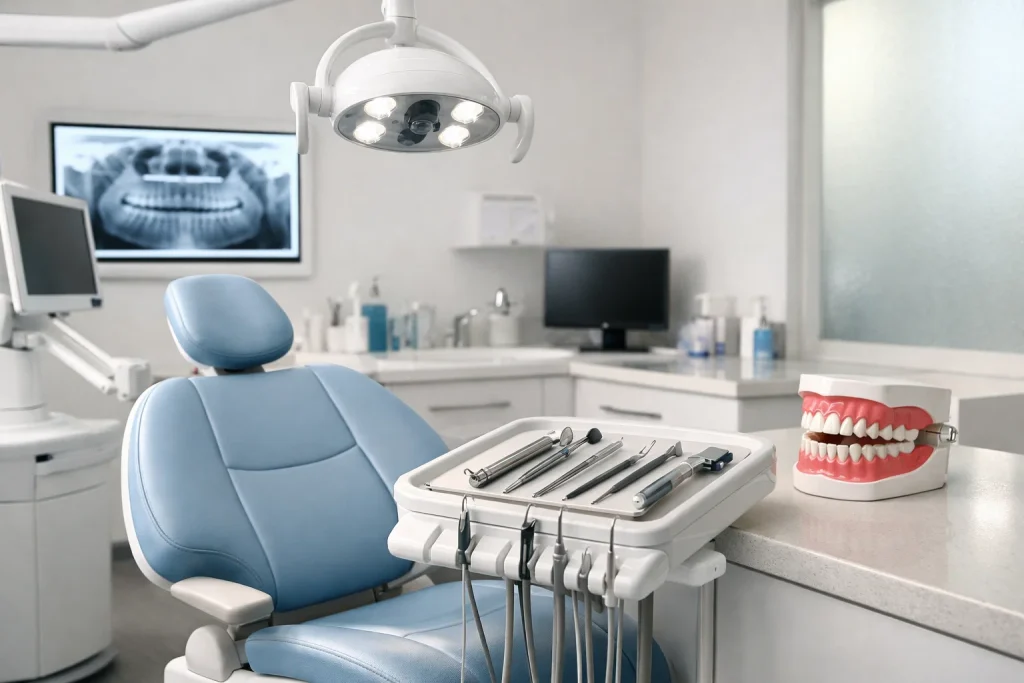
Let’s be honest, visiting the dentist for the first time, or after a long gap, can feel a little intimidating. You might find yourself asking: What exactly happens? Will it hurt? Will they judge my brushing habits?
Here’s the truth: a first dental checkup is designed to be thorough, comfortable, and informative. It’s not about scolding you; it’s about prevention, detection, and making sure your oral health stays on track. Think of it as a mini-investigation of your mouth — but one that’s meant to protect your smile, not scare you.
In this blog, we’re breaking down everything that happens in a first dental checkup. By the end, you’ll feel informed, confident, and ready to walk into your appointment without stress.
Why Your First Dental Checkup Matters
You might think, “I brush and floss regularly, why do I need a checkup?” The truth is, your oral health is closely linked to your overall health. Gum disease, cavities, and infections don’t just stay in your mouth — they can impact your immune system, heart, and even digestion.
A first checkup is all about prevention and early detection. Dentists can spot issues long before they become painful or expensive to fix. And this visit establishes a baseline — a reference point that helps your dentist track changes and catch problems early.
Step 1: Check-In and Medical History
When you walk into the office, you’ll usually fill out some forms or provide your medical history. Don’t skip this part, it’s essential. Dentists need to know about:
- Current medications
- Allergies
- Chronic conditions like diabetes, heart issues, or pregnancy
- Previous dental procedures
- Current symptoms, like sensitivity, pain, or bleeding
Why? Because your overall health affects your oral health. For instance, diabetes can make gum disease worse, while certain medications may increase the risk of dry mouth or cavities.
Step 2: The Initial Conversation
Once you’re in the chair, the dentist or dental hygienist will start with a conversation. This is your chance to speak up:
- Tell them why you’re visiting
- Describe any pain, sensitivity, or bleeding
- Talk about your oral hygiene habits
- Mention habits like smoking, coffee, or teeth grinding
The goal is simple: to understand your mouth, your habits, and your concerns. This information helps your dentist give advice that’s tailored specifically to you.
Step 3: Visual Examination
Next comes the visual examination. The dentist will use a mirror and small tools to inspect your teeth, gums, tongue, and cheeks. They’ll look for:
- Cavities or worn teeth
- Gum inflammation or recession
- Plaque and tartar buildup
- Sores, patches, or unusual tissue
This step is painless and usually quick, but it’s incredibly important. Some problems, like early cavities or gum disease, might not cause any symptoms, yet catching them early saves a lot of trouble down the line.
Step 4: Gum Health Check
Your gums are the foundation of your oral health. The dentist will measure the space between your teeth and gums with a tiny probe.
- Healthy gums: shallow pockets, minimal bleeding
- Signs of gum disease: deeper pockets, inflammation, or bleeding
Even if your gums look fine, early gum disease often has no pain. Detecting it early can prevent serious issues like bone loss or tooth loss in the future.
Step 5: Dental X-Rays
Not every first visit includes x-rays, but they’re common, especially if it’s your first appointment with a new dentist. X-rays reveal what can’t be seen with the naked eye, including:
- Cavities between teeth
- Impacted wisdom teeth
- Bone loss
- Abscesses or cysts
Modern dental x-rays are safe and use very low radiation. If you’re pregnant or concerned about exposure, you can discuss alternatives with your dentist.
Step 6: Professional Cleaning
One of the parts most people enjoy — or at least notice the results of — is the professional cleaning. Here’s what happens:
- Scaling: Removing plaque and tartar buildup
- Polishing: Smoothing surfaces and removing stains
- Flossing: Clearing debris from between teeth
- Fluoride treatment (optional): Strengthening enamel
A cleaning feels refreshing and leaves your mouth feeling smooth and clean. Some sensitivity may occur if your gums are inflamed, but it’s generally comfortable.
Step 7: Oral Cancer Screening
A thorough first checkup often includes screening for oral cancer. The dentist examines:
- Lips
- Tongue
- Gums
- Inner cheeks
- Floor of the mouth
- Throat
They look for sores that don’t heal, red or white patches, or unusual lumps. Early detection here can literally save your life, so don’t skip this step.
Step 8: Bite and Jaw Check
The dentist may ask you to bite down, open, and close your mouth in different ways. This evaluates:
- How your teeth fit together
- Signs of teeth grinding or clenching
- Jaw joint (TMJ) health
- Uneven wear on teeth
If issues are found, the dentist may recommend a night guard or other treatment to prevent damage and discomfort.
Step 9: Discussion and Personalized Plan
At the end of your visit, the dentist will explain their findings in clear, simple language. They’ll discuss:
- Areas of concern
- Any recommended treatments
- Tips for brushing and flossing
- Diet and lifestyle adjustments
- Schedule for future checkups
This is your time to ask questions. Anything from “How do I floss properly?” to “Should I get a night guard?” can be addressed.
Final Thoughts on First Dental Check-Up
Your first dental checkup isn’t something to fear. It’s an opportunity to understand your oral health, catch problems early, and start a personalized care plan that protects your smile. From history review to cleaning, x-rays, gum checks, and oral cancer screenings, every step is designed for prevention and comfort.
Think of it as an investment in yourself. A healthy mouth boosts confidence, prevents pain, and even improves overall health. By going in informed and relaxed, you’re already taking the first step toward a lifetime of healthy, happy teeth.